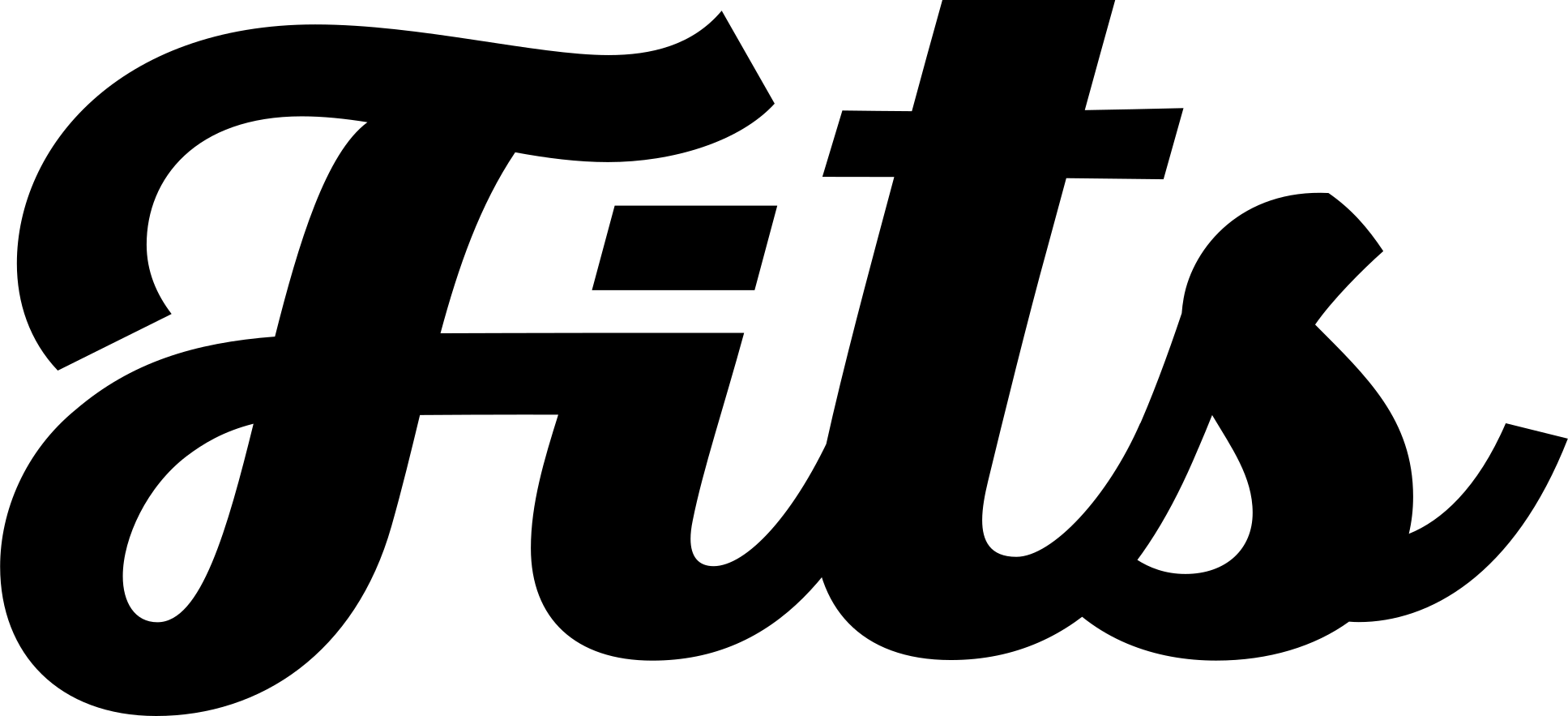
Fits is a modern version of the versatile vintage style script. It is clean, legible and easy to use. Fits was meant to be used as an everyday workhorse font, thus its uses are endless - from websites and signage to merchandise and editorial designs. It looks great on product packaging and menus, being easily readable from afar. It has some initial forms and ligatures, as well as fancier alternates for the capital letters (in case you want to spice things up a bit). Unlike its predecessor, BeachBar, Fits has more basic letter shapes which makes it the perfect script for most day-to-day design applications - think apps, websites, merchandise, posters and cards, blog titles, t-shirts, branding and animation projects, etc. As promised, Fits comes in seven weights for a different impact and with a neat set of Cyrillic letters.
FITS STYLES
Light
Aa
Regular
Aa
Medium
Aa
SemiBold
Aa
Bold
Aa
Black
Aa
Heavy
Aa
INFO
Font FamilyFits
Styles7
Initial release2019
Current version1.000
DesignVeneta Rangelova
AVAILABLE IN
LatinCyrillic
Opentype
Internet
Opentype
Quantum Computing
Opentype
Superpowers
Opentype
«C'est simple comme bonjour» est une expression française signifiant que quelque chose est extrêmement facile, évident ou sans complication.
Opentype
Glyphs
Opentype
Ах, чудна българска земьо, полюшвай цъфтящи жита
Opentype
In 1888, the Belgian critic Octave Maus invited Lautrec to present eleven pieces at the Vingt (the 'Twenties') exhibition in Brussels in February. Theo van Gogh, the brother of Vincent van Gogh, bought Poudre de Riz for 150 francs for the Goupil & Cie gallery. From 1889 to 1894, Toulouse-Lautrec took part in the Salon des Indépendants regularly. He made several landscapes of Montmartre. Tucked deep into Montmartre in Monsieur Pere Foret's garden, Toulouse-Lautrec executed a series of pleasant en plein air paintings of Carmen Gaudin, the same red-headed model who appears in The Laundress (1888). In 1890, during the banquet of the XX exhibition in Brussels, he challenged to a duel the artist Henry de Groux, who criticised van Gogh's works. Paul Signac also declared he would continue to fight for Van Gogh's honour if Lautrec was killed. De Groux apologised for the slight and left the group, and the duel never took place. Toulouse-Lautrec contributed several illustrations to the magazine Le Rire during the mid-1890s.